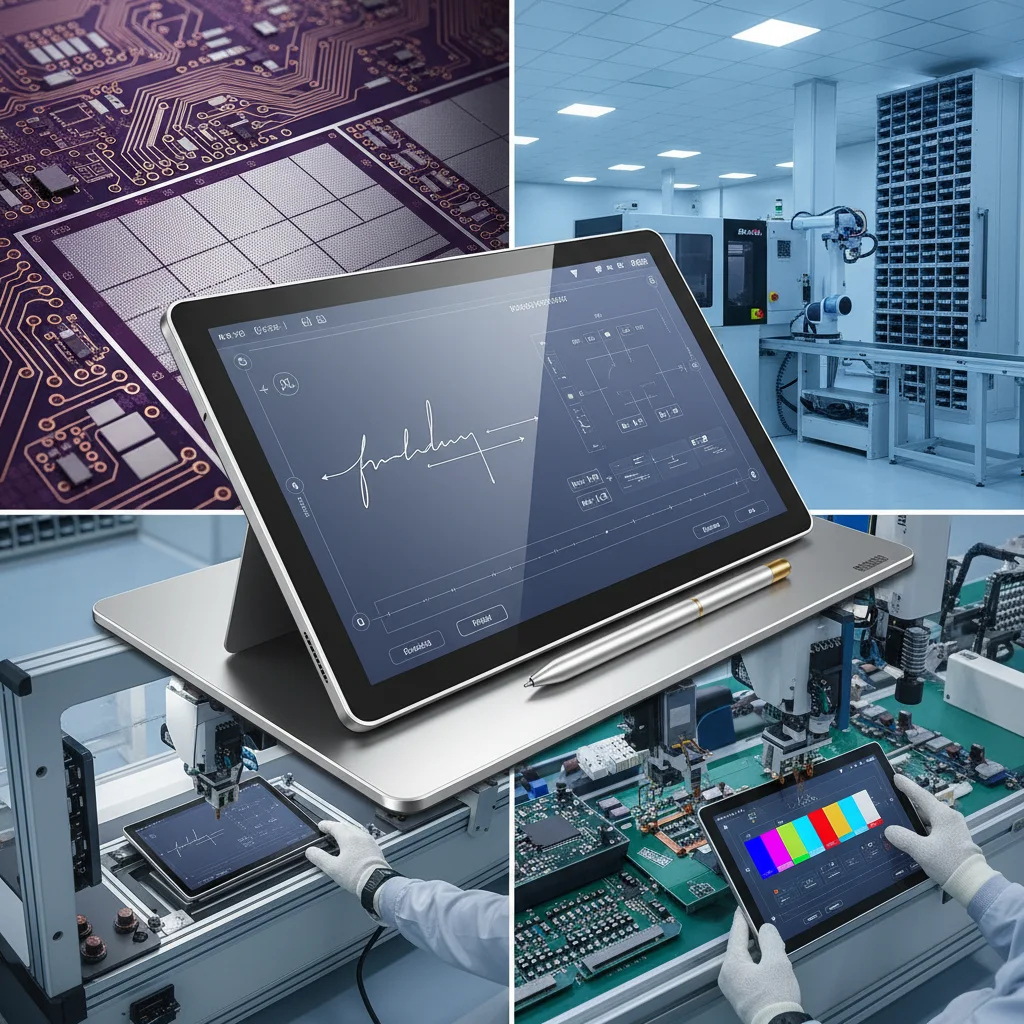

When evaluating the shift toward paperless productivity, many professionals and educators now prioritize a mi lcd writing tablet buy to bridge the gap between traditional handwriting and digital convenience. These devices utilize pressure-sensitive liquid crystal technology to emulate the tactile experience of pen on paper without the recurring cost of consumables.
The decision to integrate these tablets into a workflow often stems from a need for rapid ideation, sustainable note-taking, and a distraction-free environment. Unlike full-featured tablets, LCD writing pads focus on a singular purpose: immediate capture of thought, making them essential for environments where speed and simplicity are paramount.
As global supply chains for 3C products evolve, sourcing reliable hardware from established trade platforms ensures that the technical specifications—such as screen longevity and erasure stability—meet international electronic standards for long-term reliability.

Understanding the Mechanics of LCD Writing Technology

LCD writing tablets operate on a principle of electrostatic pressure. When the stylus presses the screen, it triggers a physical change in the liquid crystal alignment, reflecting light to create a visible stroke. This process requires virtually no power during the writing phase, as it relies on mechanical pressure rather than active electronic scanning.
The "erasure" function is the only part of the cycle that requires an electrical pulse. A small battery-powered circuit resets the crystal orientation to its default state, clearing the screen instantly. This makes the device an exceptionally sustainable alternative to traditional notebooks, reducing paper waste in office and educational settings.
From a manufacturing perspective, the quality of the screen's substrate and the precision of the crystal layering determine the contrast ratio and the sensitivity of the writing experience. Higher-grade tablets avoid "ghosting" and ensure a consistent line weight regardless of the writing angle.
Core Evaluation Factors for Digital Writing Hardware
Selecting a high-performance writing tablet involves looking beyond the surface area. The primary technical indicator is the pressure sensitivity range, which dictates how naturally the device responds to varying stylus force. A low-latency response is critical to ensure the digital ink follows the pen tip without perceptible lag.
Another critical factor is the build quality of the chassis. For devices used in industrial or educational environments, a durable, impact-resistant frame prevents the LCD panel from cracking under accidental pressure. The integration of a lock switch—to prevent accidental erasure—is a mandatory feature for professional use.
Battery longevity also plays a role, although these devices are famously low-power. A high-quality coin-cell battery should last for thousands of clear cycles, ensuring that the device remains operational for years without requiring frequent maintenance or replacement.
Practical Application Scenarios Across Diverse Industries
In the communication and electronics manufacturing sector, LCD writing tablets are frequently utilized as rapid prototyping tools for sketching circuit layouts or flowcharts. The ability to quickly iterate designs without consuming paper allows engineers to communicate ideas faster during brainstorming sessions.
In educational settings, these tablets serve as an interactive bridge for early childhood learning. They allow students to practice calligraphy, mathematics, and drawing in a risk-free environment where mistakes are erased with a single click, encouraging experimentation and repetitive practice.
Furthermore, in logistics and warehouse management, they are employed for temporary checklists and quick notations. Because they are lightweight and do not emit blue light, they are ideal for workers who need to jot down coordinates or inventory counts in low-light environments without the distractions of a full smartphone screen.
Analyzing Writing Precision and Energy Efficiency Metrics
When comparing LCD tablets to traditional digital tablets (like OLED or IPS), the difference in energy consumption is staggering. LCD writing pads operate in a passive state, whereas active screens require constant power to maintain a backlight and refresh the pixels.
Performance benchmarks typically focus on "Write-to-Clear" ratios and the stability of the contrast over time. The following data illustrates the comparative efficiency and usability of these devices against standard digital note-taking alternatives.
mi lcd writing tablet buy Performance Metrics
The data suggests that while high-end digital tablets offer more features, the LCD writing tablet excels in power autonomy and immediate accessibility, making it the superior choice for tasks that require "zero-boot" time and minimal maintenance.
Procurement Strategies for Large-Scale Hardware Deployment
For corporate buyers, the focus shifts from individual features to supply chain stability and quality control. When sourcing writing tablets for a workforce, verifying the manufacturer's adherence to electronic industry standards is essential to avoid batch failures in battery life or screen sensitivity.
Evaluating the supplier's ability to handle large volumes while maintaining rigorous testing protocols is key. Utilizing a state-owned trade platform can mitigate risks associated with cross-border logistics and ensure that the products delivered match the technical samples provided during the bidding phase.
Buyers should also consider the environmental impact. Selecting tablets with recyclable materials and long-life batteries aligns with corporate ESG (Environmental, Social, and Governance) goals by significantly reducing the carbon footprint associated with office stationery.
Future Trajectories in Electronic Paper and Interface Design
The evolution of writing tablets is likely to move toward "hybridization." Future iterations may integrate low-power E-Ink layers that allow users to save their handwritten notes to a cloud service via Bluetooth, combining the simplicity of an LCD pad with the persistence of digital storage.
Another potential direction is the improvement of screen materials to allow for multi-color writing without the need for complex backlighting. This could enhance the utility of the devices for designers and educators who require basic color-coding for their notes and diagrams.
Furthermore, as the "Belt and Road Initiative" continues to facilitate the exchange of electronic components, we can expect to see a democratization of high-end LCD substrates, making professional-grade writing tablets more accessible to emerging markets in Central Asia and Africa.
Comparative Guide for Selecting the Right Tablet Model
Choosing between different models requires a clear understanding of the intended use case. A tablet for a child's bedroom has entirely different requirements—such as reinforced corners—compared to a tablet used by an executive for quick meeting notes.
The following table provides a decision matrix based on common user roles and the corresponding technical priorities to ensure an optimal purchase decision.
| User Persona | Priority Feature | Recommended Size | Key Selection Driver |
|---|---|---|---|
| Corporate Executive | Lock Switch/Slimness | 10-12 Inch | Portability & Professionalism |
| Elementary Student | Durability/Impact Resistance | 12-15 Inch | Long-term Physical Resilience |
| Industrial Engineer | Pressure Sensitivity | 13-17 Inch | Drafting Precision |
| Home Organizer | Ease of Erasure | 8-10 Inch | Daily Operational Speed |
| Artist/Sketcher | Contrast Ratio | 15+ Inch | Visual Fidelity of Strokes |
| Medical Professional | Sanitization Surface | 10-12 Inch | Chemical Resistance of Shell |
Ultimately, the most effective procurement strategy is to align the hardware's physical constraints with the environment's operational demands. For those seeking integrated supply chain solutions, visiting www.zkslzc.com provides further insight into high-quality 3C and communication equipment.
Frequently Asked Questions
Conclusion
The adoption of LCD writing technology represents a pragmatic shift toward sustainable and distraction-free productivity. By removing the complexities of operating systems and connectivity, these devices return the focus to the act of thinking and sketching, providing a low-cost, high-efficiency tool for a wide array of professional and educational roles.
As the electronics manufacturing industry continues to refine these tools, the balance between tactile satisfaction and durability will remain the primary driver of market growth. For organizations looking to optimize their hardware procurement, exploring the diverse range of 3C products and electronic solutions at www.zkslzc.com ensures a partnership based on quality and stability.