In an era of rapid digitalization, the quest for a seamless bridge between tactile handwriting and digital efficiency has led to the rise of writing tablets for note taking. These devices are no longer just novelty gadgets; they have become essential tools for students, professionals, and creatives worldwide who seek the cognitive benefits of writing by hand without the clutter of traditional paper.
The global shift toward paperless environments, accelerated by sustainability goals and the integration of smart-office ecosystems, has placed a premium on hardware that mimics the natural friction of pen on paper. By reducing the environmental footprint of disposable stationery and enhancing the organization of information, these tablets address a critical gap in the modern productivity toolkit.
Understanding the nuances of these devices—from E-ink technology to pressure sensitivity—allows users to optimize their workflow and memory retention. Whether used in a corporate boardroom or a remote classroom, writing tablets for note taking empower individuals to capture ideas with speed and precision, ensuring that no spark of inspiration is lost in the transition to digital storage.
Global Industry Context of Writing Tablets
The global market for digital stationery has seen a surge as educational institutions and corporate entities align with ISO standards for environmental management. With the World Bank highlighting the digital divide in emerging economies, the demand for affordable, low-power writing tablets for note taking has grown, providing a viable alternative to expensive laptops in resource-constrained environments.
This industrial evolution is driven by a fundamental human need: the cognitive link between handwriting and learning. While traditional tablets offer versatility, the specialized focus of note-taking tablets reduces digital distractions, allowing for "deep work" that is increasingly rare in the age of constant notifications and multitasking.
Defining Modern Writing Tablets for Note Taking
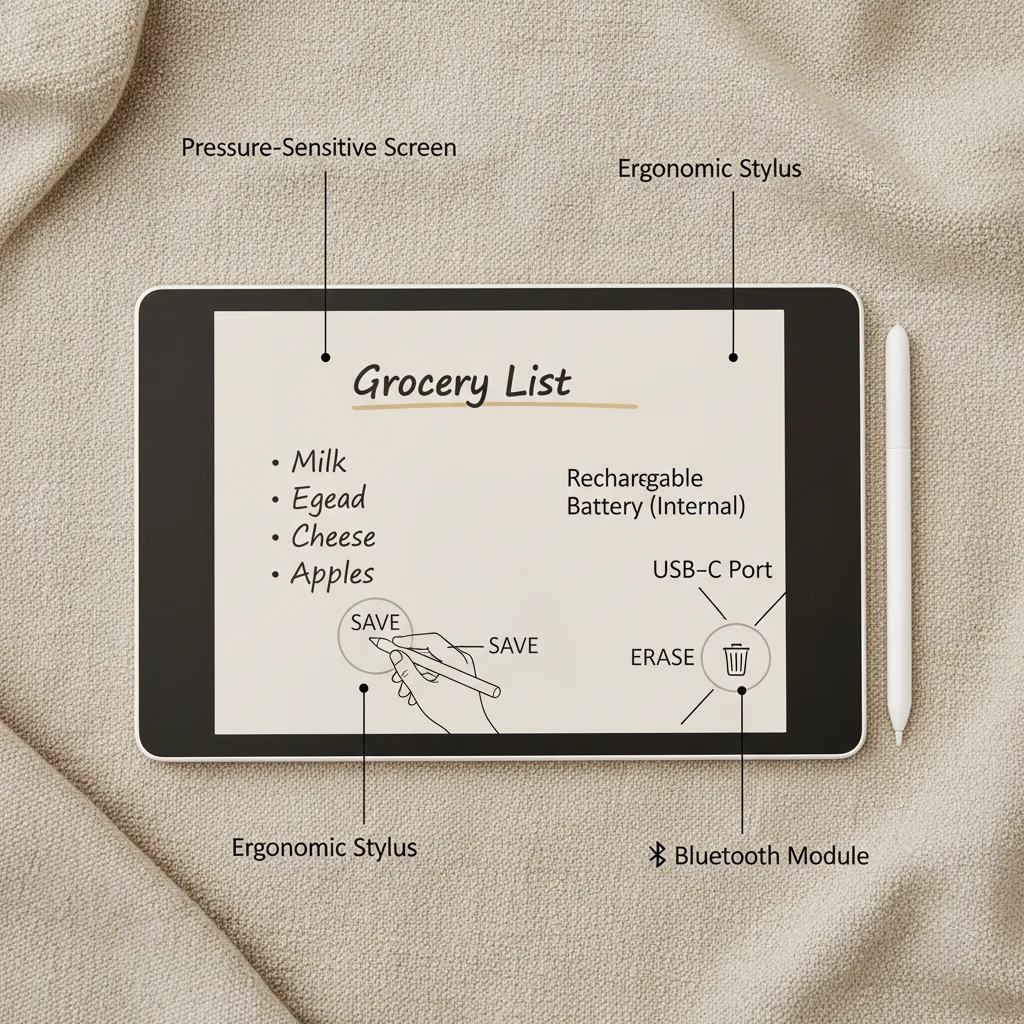
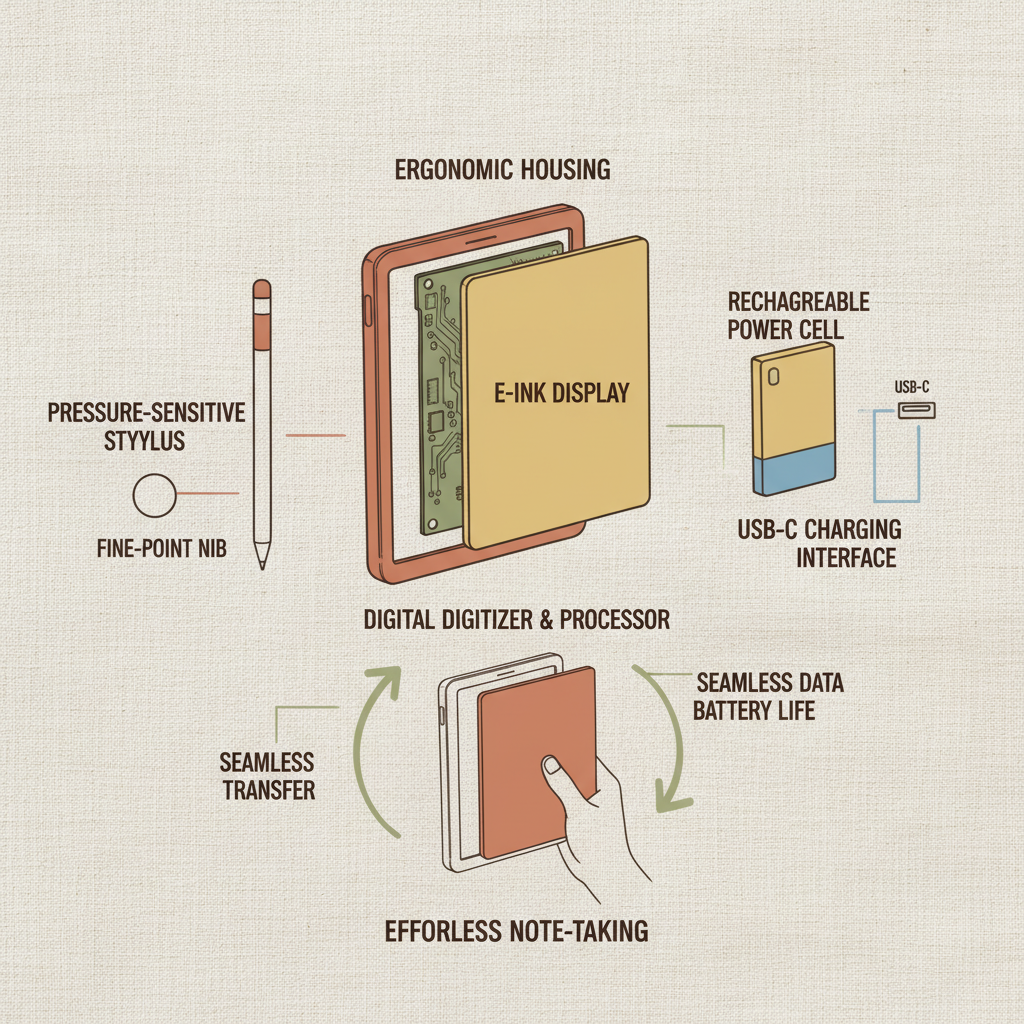
At its core, writing tablets for note taking are specialized electronic devices designed to emulate the experience of writing on paper while storing the data digitally. Unlike general-purpose tablets, these often utilize Electrophoretic Displays (E-ink) or high-precision capacitive layers that minimize glare and eye strain, making them ideal for prolonged academic or professional use.
These devices bridge the gap between the analog world and the digital cloud. By utilizing advanced styluses with varying pressure levels, they capture the nuance of a user's handwriting, which can then be converted into searchable text via Optical Character Recognition (OCR). This synergy ensures that the fluidity of sketching and jotting is preserved while gaining the organizational power of a database.
In a broader humanitarian and industrial context, these tablets serve as critical tools for field workers and engineers who need to document findings in harsh environments where traditional paper would be damaged or where a full-sized computer would be impractical. They represent a move toward "lean" digitalization—providing exactly the tools needed for the task without unnecessary overhead.
Core Components and Technical Factors
The efficacy of writing tablets for note taking relies heavily on Display Latency. For a device to feel natural, the "ink" must appear to flow from the pen tip in real-time. Low latency is achieved through high refresh rates and optimized firmware, ensuring that there is no perceptible gap between the physical motion and the digital rendering.
Pressure Sensitivity and Tilt Support are the cornerstones of professional-grade writing tablets for note taking. By detecting how hard a user presses or the angle of the stylus, the device can vary line thickness and shading, which is essential for mathematical notation, architectural sketching, and intuitive mind-mapping.
Finally, Battery Longevity and Connectivity determine the device's practical utility. Many high-end note-taking tablets utilize E-ink technology, which only consumes power when the image changes, allowing for weeks of use on a single charge. Coupled with seamless cloud synchronization, these devices ensure that notes are backed up and accessible across all professional platforms.
Practical Applications Across Global Sectors
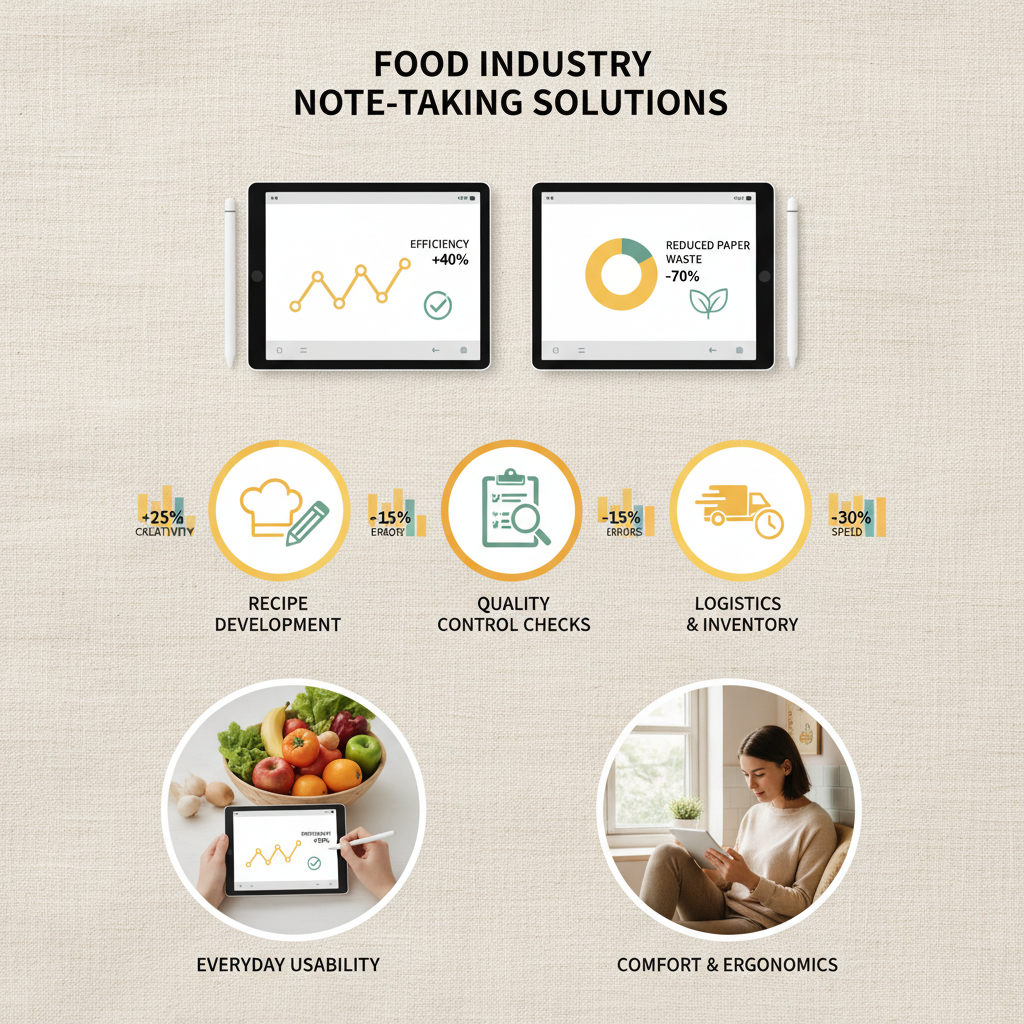
In the medical sector, writing tablets for note taking are used by clinicians for rapid patient charting during rounds, combining the speed of handwriting with the security of encrypted digital records. Similarly, in legal fields, they allow for the seamless signing of documents and the annotation of briefs without the need for massive physical archives.
In remote industrial zones, such as mining or oil rigs, these devices are indispensable. Engineers use them to sketch modifications to machinery on-site, where the ruggedized builds of specialized tablets protect the data from dust and moisture, ensuring that critical technical changes are documented accurately before being synced to the central headquarters.
Efficiency Comparison of Note Taking Methods
Long-Term Value and Sustainability Benefits
The adoption of writing tablets for note taking offers a compelling environmental narrative. By drastically reducing the consumption of paper and the associated chemicals used in ink production, organizations can significantly lower their carbon footprint. This aligns with the global push toward "Green IT," where hardware is designed for longevity rather than planned obsolescence.
Beyond the ecological impact, there is an emotional and logical value in the reliability of digital archives. The fear of losing a physical notebook or having ink smudge during a critical meeting is eliminated. The trust established by automatic backups and the dignity of a clean, professional digital presentation enhance the user's confidence in high-stakes corporate environments.
Future Trends in Digital Ink Technology
Looking forward, the integration of AI-driven handwriting analysis is set to revolutionize writing tablets for note taking. We are moving toward devices that don't just store ink, but understand context—automatically tagging notes, suggesting references, and organizing sketches into structured databases without manual input.
Material science is also playing a role, with the development of flexible E-ink screens that can fold or roll, making these tablets even more portable. The goal is to create a "digital paper" that is indistinguishable from a real sheet of A4 paper in terms of feel and visual properties, yet possesses the computing power of a modern workstation.
Furthermore, the push toward sustainable energy is leading to the exploration of solar-integrated screens. Imagine a note-taking tablet that never needs to be plugged in, harvesting ambient light to power its low-energy display, thereby achieving true energy independence for field researchers and travelers.
Overcoming Common Implementation Challenges
Despite their benefits, some users find the initial transition to writing tablets for note taking daunting, particularly regarding the learning curve of software organization. The solution lies in intuitive UX design and the adoption of a "hybrid" approach, where users gradually migrate their most frequent workflows to the device.
Another challenge is the "glass-feel" of some screens, which can feel too slippery compared to paper. Manufacturers are addressing this by implementing textured screen protectors or etched glass surfaces that provide the necessary tactile friction, ensuring the muscle memory of handwriting is preserved and fatigue is reduced.
Finally, data interoperability remains a hurdle. To overcome this, the industry is moving toward open-standard file formats (such as PDF and SVG) that ensure notes created on one brand of tablet can be easily edited and viewed on any other device, preventing vendor lock-in and ensuring long-term data accessibility.
Comparison Analysis of Writing Tablet Implementation Strategies
| Implementation Tier |
Primary Hardware Focus |
Deployment Complexity |
Efficiency Gain (1-10) |
| Individual Student |
Basic E-ink / Low Latency |
Low |
8 |
| Corporate Executive |
Cloud-Synced / High Res |
Medium |
9 |
| Field Engineer |
Ruggedized / Long Battery |
High |
10 |
| Medical Professional |
Encrypted / Sterilizable |
High |
9 |
| Digital Artist |
Pressure Sensitive / Tilt |
Medium |
8 |
| Academic Researcher |
OCR-Enabled / Large Storage |
Medium |
9 |
FAQS
Unlike general tablets, specialized note-taking tablets often use E-ink displays which eliminate blue light and glare, drastically reducing eye strain. They are specifically tuned for a "paper-like" feel and typically offer significantly longer battery life—lasting weeks instead of hours—because they only consume power when the screen content is updated.
Yes, most modern writing tablets for note taking feature advanced OCR (Optical Character Recognition) software. This allows the device to analyze the shapes of your handwritten letters and convert them into digital text that can be searched, edited, and exported to Word or Google Docs.
Depending on the model, yes. Many manufacturers produce ruggedized versions specifically for the manufacturing and engineering sectors. These models feature reinforced casings, water-resistant screens, and dust-proof ports, making them ideal for environments where a standard tablet would be too fragile.
The difference is substantial. While a laptop might last 8-12 hours, an E-ink based writing tablet can often go for 2 to 4 weeks on a single charge. This is because the display technology does not require a constant backlight to show an image, making them perfect for long trips or remote work.
The transition is generally very smooth because the primary interaction—writing with a pen—remains the same. Most devices are designed with a "minimalist" interface to mimic a notebook, meaning there are very few menus to navigate, making it accessible for users of all ages and technical skill levels.
They significantly reduce the reliance on single-use paper products. Over a professional career, a single tablet can replace thousands of paper notebooks and countless pens. Additionally, the energy efficiency of E-ink technology means a lower carbon footprint compared to high-power LED screens.
Conclusion
The integration of writing tablets for note taking into our daily professional and academic workflows represents a perfect harmony between analog intuition and digital power. By combining the cognitive benefits of handwriting with the efficiency of cloud storage and OCR technology, these devices solve the age-old problem of information fragmentation and waste.
As we move toward a more sustainable and digitally integrated future, investing in high-quality digital stationery is not just a matter of convenience, but a strategic move toward better productivity and environmental stewardship. We encourage you to embrace this evolution and streamline your cognitive process today. Visit our website: www.zkslzc.com