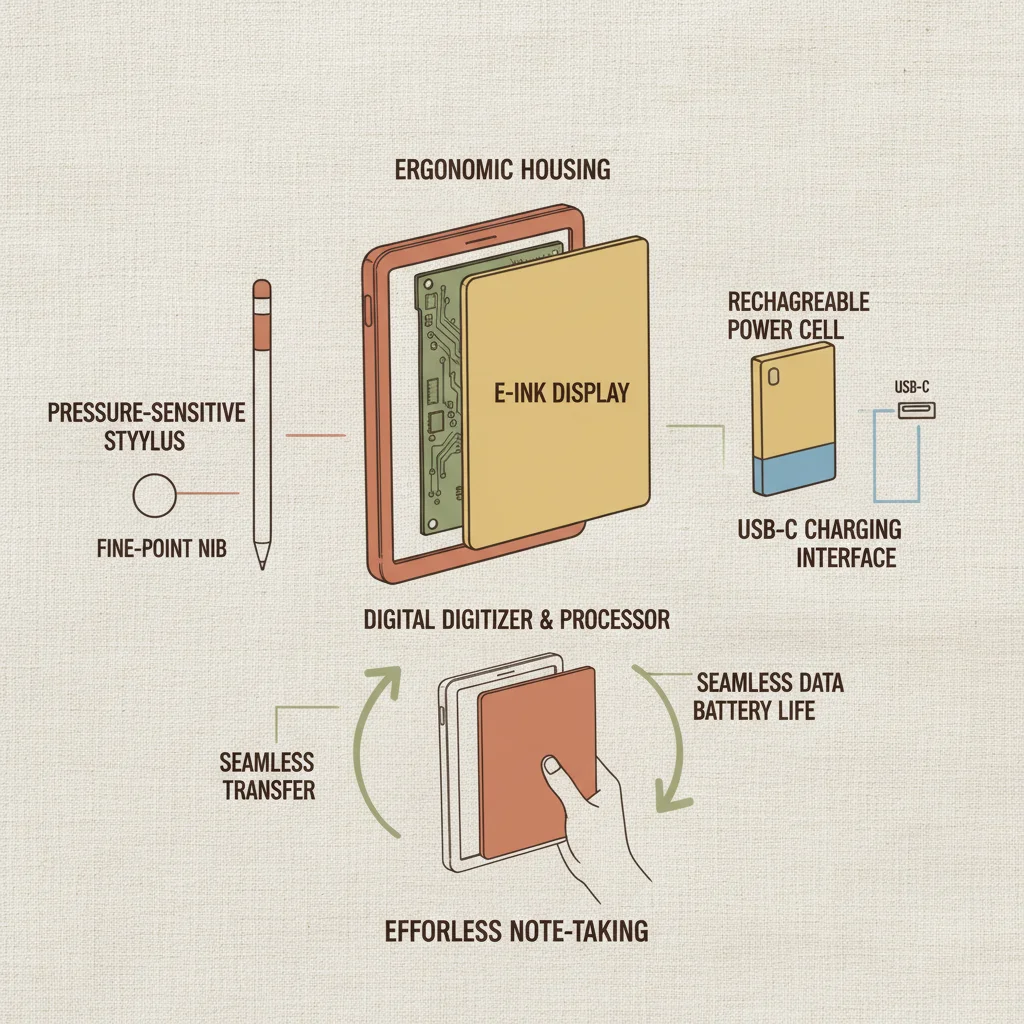
In an era dominated by rapid digitalization, the demand for an intuitive, tactile way to capture ideas has led to the resurgence of specialized hardware. A writing tablet for note taking bridges the gap between the cognitive benefits of handwriting and the efficiency of digital storage, offering a seamless transition for professionals and students alike. By mimicking the natural friction of pen on paper, these devices ensure that the creative flow remains uninterrupted by the distractions of a full-featured computer.
Globally, the shift toward paperless environments is no longer just a trend but a corporate and educational mandate. Integrating a writing tablet for note taking into daily workflows significantly reduces carbon footprints while enhancing the organization of intellectual property. From high-stakes boardroom meetings to remote lecture halls, the ability to sketch diagrams and jot down rapid-fire thoughts digitally has become a cornerstone of modern productivity.
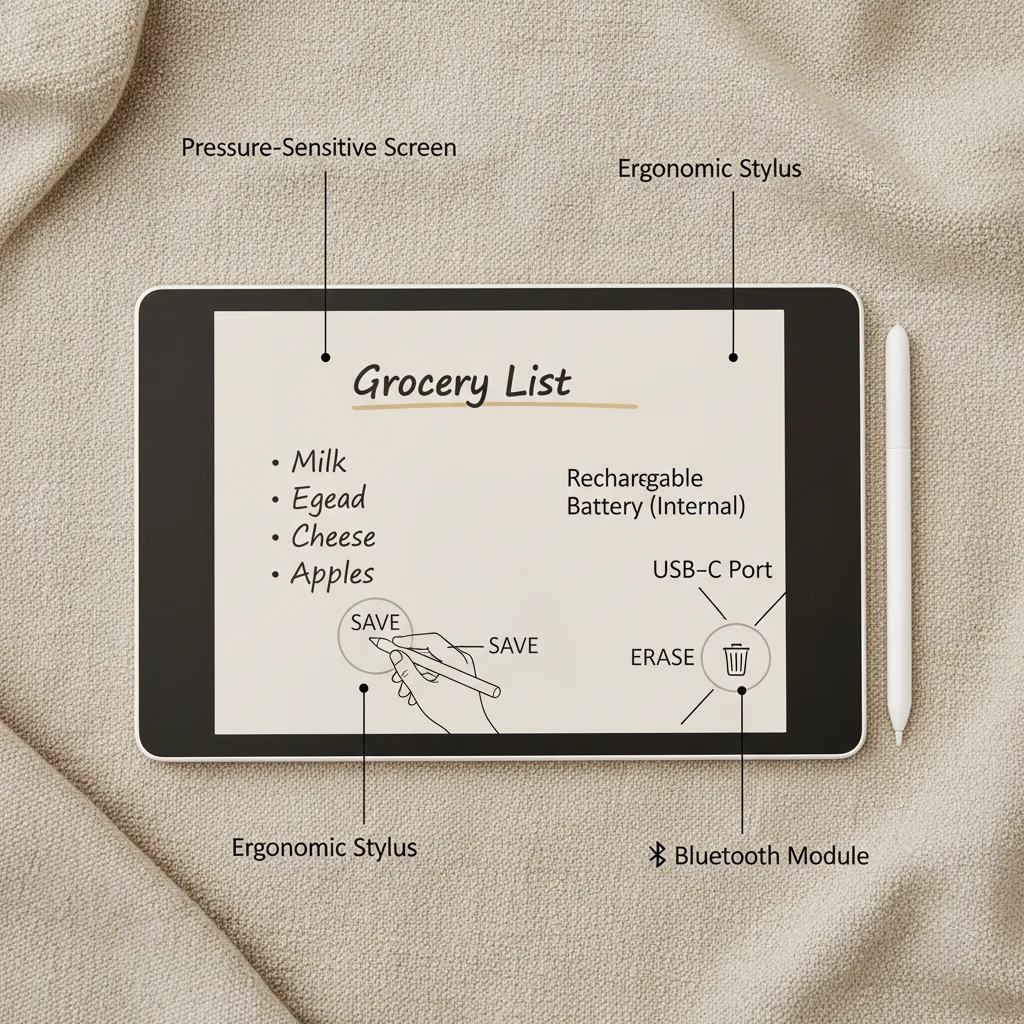
However, the challenge remains in finding a device that balances battery longevity, pressure sensitivity, and ergonomic design. Many users struggle with the "glass-like" feel of standard tablets, which can lead to hand fatigue and decreased writing precision. This is where advanced communication and electronic manufacturing expertise come into play, creating specialized surfaces that prioritize the human experience of writing.
The Global Evolution of Digital Note-Taking Hardware
The transition from traditional graphite and parchment to the modern writing tablet for note taking reflects a broader industrial shift toward the "Internet of Things" (IoT) and smarter hardware. Initially, digital writing was limited to cumbersome graphics tablets that required a connected PC, but the evolution of SoC (System on Chip) technology has enabled standalone devices that operate with minimal power consumption.
Today, these devices are integrated into global education systems, following ISO standards for electronic reliability and user safety. By providing a dedicated interface for handwriting, these tablets address the "digital distraction" problem, allowing users to focus solely on the act of creation and documentation without the lure of notifications or complex operating systems.
Core Technical Specifications for Optimal Writing
When evaluating a writing tablet for note taking, the most critical parameter is the pressure sensitivity level. Professional-grade devices typically offer 4,096 to 8,192 levels of pressure, allowing the user to vary line thickness and opacity based on how hard they press the stylus. This nuance is essential for architects, designers, and students who use diagrams to visualize complex concepts.
Another pivotal factor is the latency—the delay between the pen tip touching the surface and the digital ink appearing. In high-end manufacturing, optimizing the communication protocol between the digitizer and the processor is key to achieving "zero-latency" writing. This ensures that the device feels responsive and natural, preventing the cognitive disconnect that occurs when the digital line lags behind the physical movement.
Lastly, the display technology plays a massive role. While LCDs are common, E-Ink displays are becoming the gold standard for a writing tablet for note taking due to their reflective nature, which eliminates eye strain and provides a matte surface that closely resembles high-quality bond paper.
Ergonomics and Cognitive Benefits of Hand-Writing
Research in educational psychology suggests that using a writing tablet for note taking leads to better information retention than typing. The physical act of synthesizing information and writing it by hand engages more neural pathways, fostering a deeper understanding of the material.
From an ergonomic perspective, the angle of the device and the weight of the stylus are paramount. A well-designed writing tablet for note taking reduces the risk of repetitive strain injuries (RSI) by supporting a natural wrist position, which is often compromised when using a standard laptop keyboard for long periods.
The ability to annotate PDFs and hand-drawn sketches directly on a digital canvas allows for a non-linear thinking process. This flexibility is why many creative professionals prefer a writing tablet for note taking over traditional tablets, as it prioritizes the "thinking" process over the "computing" process.
Performance Benchmarks Across Different Tablet Types
Not all writing devices are created equal. To understand the landscape, we must categorize the writing tablet for note taking into three main categories: E-Ink tablets, Electromagnetic Resonance (EMR) tablets, and Capacitive tablets. Each offers a different balance of battery life, feel, and connectivity.
By benchmarking these technologies against user preferences for "natural feel" and "data portability," we can see a clear trend: users are increasingly prioritizing the tactile experience over the sheer number of software features.
User Satisfaction Ratings for Note-Taking Tablet Technologies
Industrial Applications and Professional Use Cases
In the field of industrial engineering, a writing tablet for note taking is indispensable for on-site inspections. Engineers can mark up blueprints in real-time, adding annotations that are instantly synced to the cloud for the design team to review, eliminating the need for scanned paper copies.
Medical professionals also leverage these devices for patient charting. The ability to quickly sketch a symptom or draw a diagram of a surgical procedure, combined with the security of digital encryption, makes the writing tablet for note taking a safer and more efficient tool than the traditional clipboard.
Sustainability and the Environmental Impact of Paperless Writing
The environmental cost of traditional paper production is staggering, involving massive water consumption and deforestation. Switching to a writing tablet for note taking significantly mitigates this impact, especially in large-scale corporate settings where thousands of pages are wasted daily.
Beyond just replacing paper, modern manufacturers are focusing on the "circular economy" by using recyclable plastics and cobalt-free batteries in their tablet designs. This holistic approach ensures that the digital transformation does not come at the cost of the planet's health.
Furthermore, the reduction in physical storage requirements—no more filing cabinets or off-site warehouses—leads to a decrease in the overall carbon footprint of office management, making the writing tablet for note taking a key tool for corporate sustainability goals.
Future Innovations in E-Ink and Haptic Feedback
The next frontier for the writing tablet for note taking is the integration of advanced haptic feedback. Future devices will not just mimic the look of paper but will use micro-vibrations to simulate the actual "grain" and "tooth" of different paper types, from smooth vellum to rough watercolor paper.
We are also seeing a convergence of AI and handwriting recognition. Upcoming models will likely feature real-time "semantic tidying," where a writing tablet for note taking can automatically organize messy handwritten scribbles into structured digital outlines without losing the original handwriting style.
Finally, the move toward transparent and flexible displays will allow these tablets to be integrated into other surfaces, potentially turning any flat area into a writing tablet for note taking, further blurring the line between the physical and digital workspaces.
Comparative Analysis of Writing Tablet Technologies
| Technology Type |
Battery Life |
Tactile Feel |
Sync Speed |
| E-Ink Display |
Weeks |
Excellent |
Moderate |
| EMR Digitizer |
Days |
Very Good |
Fast |
| LCD Capacitive |
Hours |
Slippery |
Instant |
| Hybrid-Surface |
Days |
Good |
Fast |
| Analog-Digital |
Months |
Perfect |
Delayed |
| OLED Stylus |
Hours |
Moderate |
Instant |
FAQS
Unlike multipurpose tablets, a dedicated writing tablet for note taking typically uses E-Ink or specialized matte surfaces that reduce glare and mimic paper friction. They are designed to minimize distractions (no social media notifications) and often have battery lives that last for weeks instead of hours, making them superior for focused deep work and long academic sessions.
It depends on the display technology. E-Ink tablets are incredibly energy-efficient and can often last several weeks on a single charge because they only use power when the screen is refreshed. EMR and LCD-based tablets require more frequent charging, usually every few days, but offer faster refresh rates for animation and video.
Yes, most modern writing tablets for note taking include OCR (Optical Character Recognition) software. This allows you to convert your cursive or printed handwriting into searchable, editable digital text, which can then be exported as a Word document or PDF for professional sharing.
Absolutely. Many writing tablets for note taking offer "line stabilization" and "stroke smoothing" features. These digital assists help correct shaky lines and ensure that the output is clean and legible, making them excellent tools for accessibility and inclusive education.
Professional-grade devices are built with tempered glass or high-impact polymers. Because they are designed for constant friction from a stylus, the surfaces are treated with anti-scratch coatings. However, the "paper-feel" films used in some models may wear down over years of use and can be replaced easily.
Yes, significantly. By replacing the need for thousands of sheets of paper and disposable plastic pens, a single writing tablet for note taking can prevent a substantial amount of waste over its lifecycle. Many manufacturers are now using recycled materials to ensure the device itself is sustainable.
Conclusion
The integration of a writing tablet for note taking into the modern professional and academic toolkit is more than just a convenience—it is a cognitive upgrade. By combining the tactile intelligence of handwriting with the scalability of digital data, these devices solve the age-old conflict between analog feel and digital efficiency. From reducing environmental waste to enhancing memory retention and professional organization, the value proposition is clear.
As we look toward a future of haptic realism and AI-assisted documentation, the writing tablet will continue to evolve from a simple accessory into a primary interface for human thought. Whether you are an engineer in the field or a student in a lecture, investing in a dedicated note-taking device is a step toward a more focused, sustainable, and productive intellectual life. Visit our website: www.zkslzc.com